Rubber vibration damping pads
rubber blocks, rubber buffer pads,Rubber vibration damping pads.customized rubber buffer pads.
Free shipping on orders over $50!
- Satisfaction Guaranteed
- No Hassle Refunds
- Secure Payments
描述
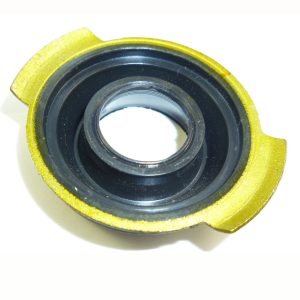
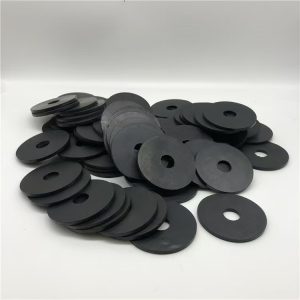
Rubber vibration damping pads (also known as rubber blocks, rubber buffer pads, etc.).
1. Product Features and Core Functions Rubber vibration damping pads utilise rubber as their primary material, combining high elasticity with wear resistance, tear resistance, and corrosion resistance. Their core function is to absorb vibrations and impacts, providing cushioning and stable support. This reduces operational noise, minimises structural damage caused by vibrations, and enhances overall operational stability and safety.
2. Typical Application Scenarios
A. Industrial Sector: – Precision equipment (e.g., CNC machine tools, stamping machinery): Absorbs operational vibrations, reduces impact forces, extends mould lifespan, and improves product yield rates. – Petrochemical industry: Corrosion-resistant rubber blocks withstand acid, alkali, and salt solution erosion, operate across -30°C to 150°C temperature ranges, and replace traditional metal shims to lower maintenance costs. – Heavy machinery (e.g., port cranes): High-load rubber pads overcome limitations of metal supports, tripling wind resistance to ensure equipment stability during typhoon conditions.
B. Construction Sector: Earthquake Mitigation: Plate rubber bearings in bridge engineering dissipate energy through deformation, maintaining structural integrity with 280mm horizontal displacement under 7-degree seismic intensity; in foundation isolation systems for super-high-rise buildings, lead-core rubber bearings reduce seismic response acceleration by 60%; Waterproofing: Self-adhesive rubber pads revolutionise construction techniques, reducing joint leakage rates from 1.2% to 0.03% with a service life exceeding 30 years. Prefabricated construction: Adjustable rubber pads resolve component connection precision issues, controlling vertical deviation in precast wall panel installation to within 2mm and shortening construction cycles by 35%.
C. Transportation Sector: Automotive: Rubber damping pads installed in door hinges and engine mounts enhance driving and operational quietness and comfort (e.g., transforming door-closing sounds from a ‘thud’ to a soft ‘click’); Rail Transport: Rubber pads in metro station waterproofing projects significantly reduce leakage rates at joints, ensuring operational safety.
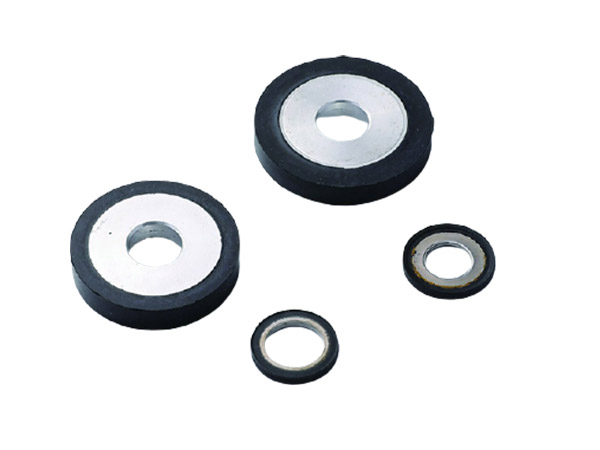
3. Product Forms and Customisation Rubber vibration dampers are available in multiple configurations including double-plate, cylindrical, and sheet types.
They can be composite-bonded with metals (such as steel plates) to form ‘rubber-metal composite products’, adapting to diverse equipment load-bearing requirements and installation scenarios to achieve a balance between performance and cost.