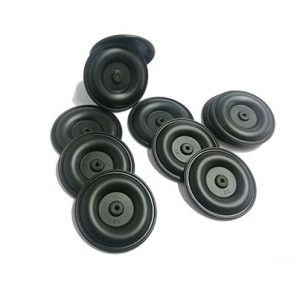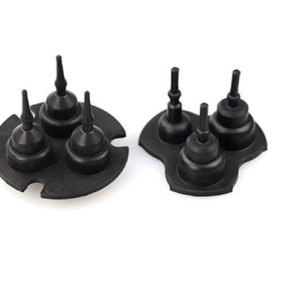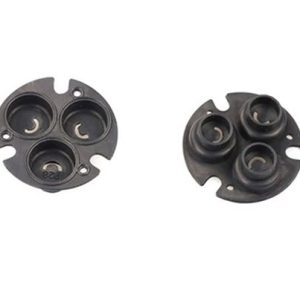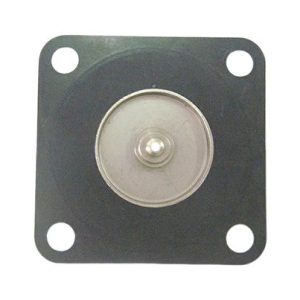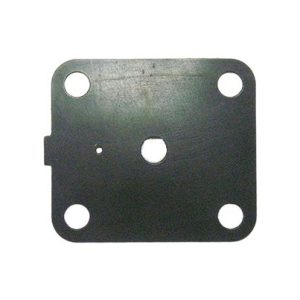
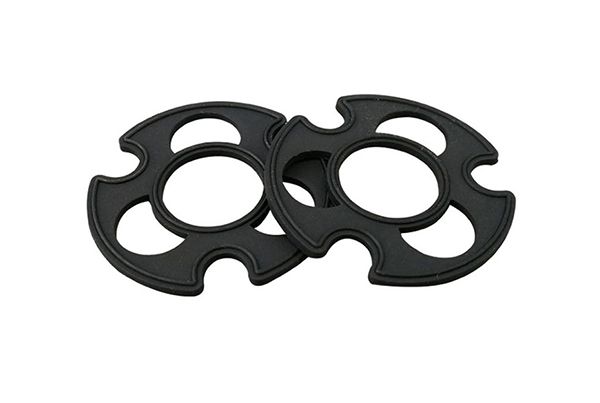
Micro Pump rubber diaphragm
Micro Pump rubber diaphragm,oil pump seals,customized pump diaphragm.
Free shipping on orders over $50!
- Satisfaction Guaranteed
- No Hassle Refunds
- Secure Payments
描述
If you have special requirements for the products you need, please contact us. We can provide customized services according to your needs.
The rubber diaphragms of small pumps are key components in diaphragm pumps. Their core feature lies in achieving leak – free fluid transportation through elastic deformation, while also possessing characteristics such as corrosion resistance and wear resistance. The following is a detailed analysis:
I. Core Features
1. Material Diversity
Common materials for rubber diaphragms include EPDM (Ethylene – Propylene – Diene Monomer), NBR (Nitrile Butadiene Rubber), and fluororubber. For example:
– EPDM: Resistant to weak acids, alkalis, alcohols, and water vapor, with an applicable temperature range of – 40 to 130°C. It is suitable for non – corrosive media such as clean water and sewage.
– NBR: Exhibits excellent oil resistance and is suitable for environments involving engine oil and lubricating oil.
– Fluororubber: Resistant to strong acids, alkalis, and high temperatures, but with a relatively high cost.
2. Structural Design
The diaphragm drives the fluid through reciprocating motion, and the check valve controls the flow direction, enabling self – priming and low – shear transportation to protect the integrity of the fluid (e.g., in the food and pharmaceutical industries).
3. Performance Advantages
– Leak – free: Isolates the fluid from the driving components, making it suitable for toxic and flammable media.
– Pressure and wear resistance: Cloth – inserted diaphragms (e.g., nylon – reinforced) can enhance the impact resistance and extend the service life.
II. Main Applications
1. Industrial Fields
– Chemical industry: Used for transporting acid and alkali solutions and solvents (the material should be selected according to the medium, e.g., PTFE for highly corrosive media).
– Environmental protection: For treating sewage and slurry. EPDM diaphragms are commonly used due to their good water resistance.
2. Special Scenarios
– Food and pharmaceutical industries: The low – shear design ensures that active substances in products such as yogurt and medicinal liquids are not damaged.
– Agricultural irrigation: The self – priming function allows direct pumping of water from a low – lying position without the need for pump priming.
III. Selection Suggestions
1. Medium compatibility: Select PTFE or fluororubber for corrosive media, and NBR for oils.
2. Pressure and temperature: EPDM is suitable for medium – low pressure and normal – temperature environments. Metal composite diaphragms are required for high – temperature and high – pressure conditions.
3. Maintenance cost: Pure rubber diaphragms are easy to replace, while composite diaphragms have a longer service life but a higher price.